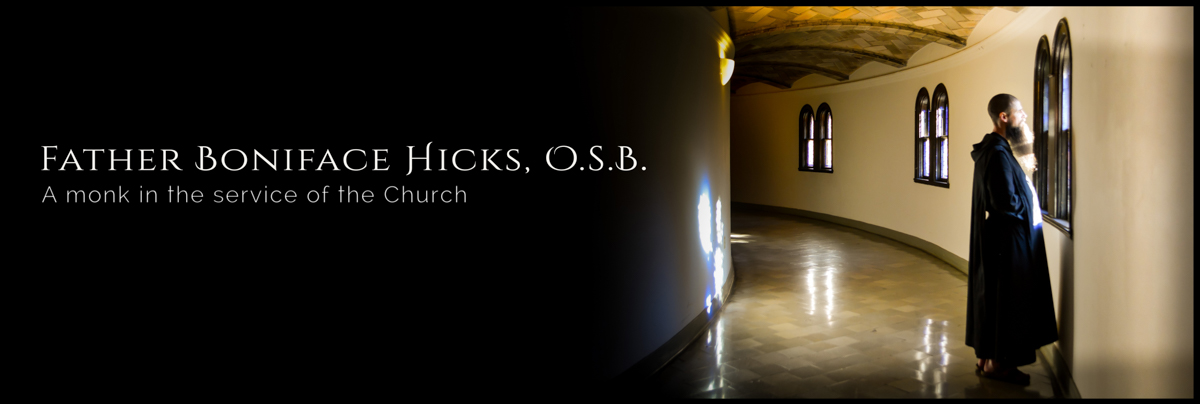
Written for Exodus 90 in 2023, as part of a series of ten reflections on the art of accompaniment.
This Gospel passage summarizes the whole of salvation history and its fulfillment in Christ with a single commandment: “Love one another as I love you.” Earlier Jesus indicated that the greatest commandment in the Old Testament was to love the Lord your God and to love your neighbor as yourself. When He gave that answer He could not yet give the new commandment, because He had not yet demonstrated the greatness of His Love–to lay down His life for us. At the Last Supper He is able to do that, because the Last Supper already contains His whole passion, death and Resurrection–this is my Body given up for you…this is my Blood poured out for you…do this in memory of me. He gives Himself freely and totally for us. Knowing this, we can walk back through all that we have reflected on in accompaniment in the past nine articles and understand the pathway of the redemption that Jesus establishes for us.
God is a communion of persons and His goal for us was always to live in a communion of persons with each other. In heaven there are only communions of persons between everyone. Due to sin, shame entered in and ruptured this communion of persons, causing Adam and Eve to hide themselves and be ashamed of their nakedness. From then on, their original transparency (nakedness) felt vulnerable (woundable)–they knew they could be wounded be another person and so they put up defenses to protect themselves. The feelings of shame that come with sin are intensified with silence, judgment and secrecy and healed through empathy. When the vulnerability of sharing our shame is met with empathy, a communion of persons begins to heal and grow.
In the fullness of time, God became man in Jesus Christ and He entered into our fallen condition. Through His Passion He enters into all our sin, wounds and shame and brings the healing power of empathy in His divine mercy. In this way He sets off a chain reaction, bringing to each one of us His own ultimate vulnerability on the Cross and making room for each one of us in the tender communion of His own Heart. Then He commands us to bring that healing empathy to others, to love one another as He loves us (and by His grace He is with us and in us as we do that). In this way we reverse the process of rupture and form communions of persons with others.
This is no easy path. Loving as Jesus loves is hard. It is a path of blood, sweat and tears. It does not allow for the short cuts of spiritual bypassing (telling others what to do without lifting a finger to help them) and it is not helped by intensifying shame through surveillance accountability. There are no easy fixes for ourselves or for others. Spiritual disciplines play a role of course, but only in so far as they are in the service of relationships–fighting for each other, picking each other up when we fail, encouraging each other in the struggle. When we journey together we have the chance to accompany each other through offering our loving presence, our empathy, our encouragement and our hope. In this way we extend the love of Christ and we develop communions of persons and we begin to enjoy a foretaste of heaven. In this way, an Exodus fraternity can truly be a healing force for the Church and for the whole world.